Skip to content Skip to footer

Rules of the Road & Aids to Navigation (ATONS) as applied to Narragansett Bay

Better Bay Alliance (BBA) | February 2026

Objectives:

Navigation Rules:

“The Rules of the Road”

Who wrote the rules?

Navigation Rules” are published by the U.S. Department of Homeland Security for the United States Coast Guard.

Updated copies can be downloaded online at: navcen.uscg.gov

Navigation Rules International-Inland

Why do boaters need Rules?

To protect against loss of life, injury, and property
damage as a result of collisions, all to Prevent
Accidents!

Most Collisions Could Be Avoided By…
  • Practicing the “Rules of the Road”
    Rule 1
  • Use of a “proper lookout”
    Rule 5
  • Maintaining safe speed
    Rule 6
  • Displaying & understanding proper lights
    Rule 20
  • Knowing the “Aids to Navigation”
Rules of the Road

USCG Navigation Rules vs US Sailing Racing Rules

Navigation Rules International-Inland

Navigation Rules

USCG “Navigation Rules” cover regulations for all vessels equipment and interactions between different types of water vessels when they meet

The Rules of Sailing

The Rules of Sailing

US Sailing racing rules specifically cover interactions between sailing vessels (ONLY) when racing
Responsibility & Definitions

Ground Rules for Navigation

General Definitions
Underway Not at anchor or made fast to the shore or aground
Right-of-way The right and duty to maintain course and speed
Stand-On Vessel Vessel that has the right of way
Give Way Vessel Must keep clear of the stand-on vessel
Short Blast A blast of approximately 1 second
Prolonged Blast A blast of 4 to 6 seconds

“Safe Speed” Definition

Speed that allows proper and effective action to avoid collision based on the
following factors:

  • Visibility
  • Traffic density and characteristics
  • Maneuverability, draft
  • Background clutter
  • Weather, wind, current & navigational hazards

Encountering Other Vessels

Rule 13

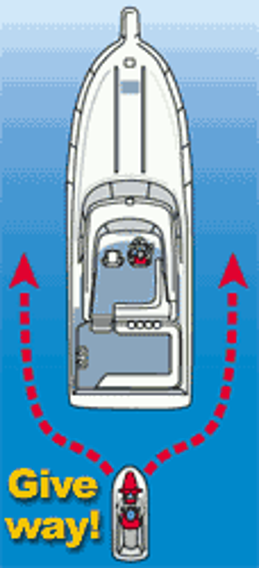
Overtaking

Vessel that is passed by another from a position more than 22.5 degrees abaft of it’s beam is the stand-on vessel. The give-way vessel should not see the green or red navigation sidelights. If in doubt whether overtaking or crossing, always assume overtaking.

Give-way vessel will keep clear of stand-on vessel until finally well past and clear.

Rules of the Road
Rule 14

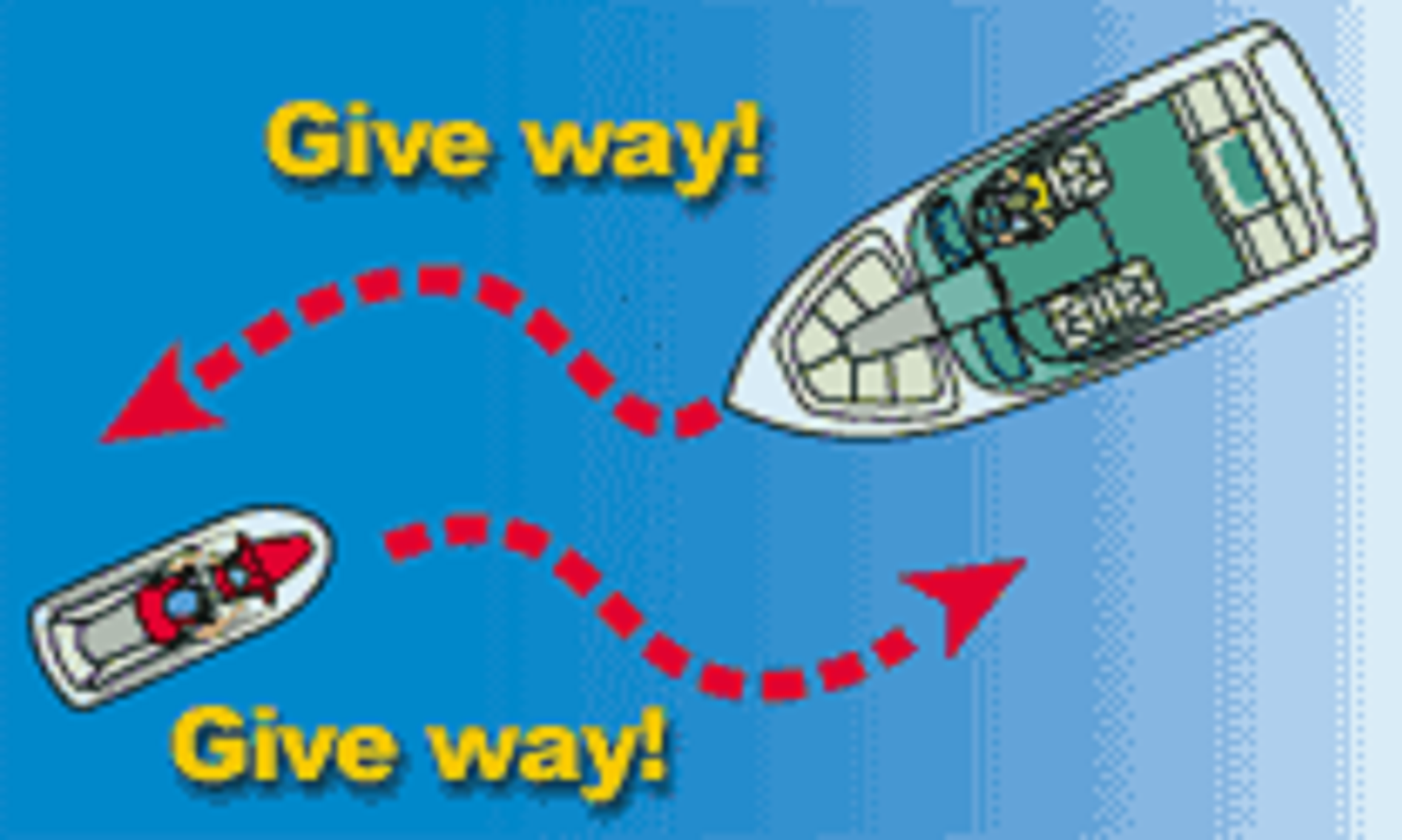
Head On

When two power-driven vessels are on reciprocal courses, vessels will steer to starboard so each shall pass port to port of each other. At night, vessels in a head-on situation should observe masthead light(s) in a line and one or both sidelights.

Rules of the Road
Rule 15

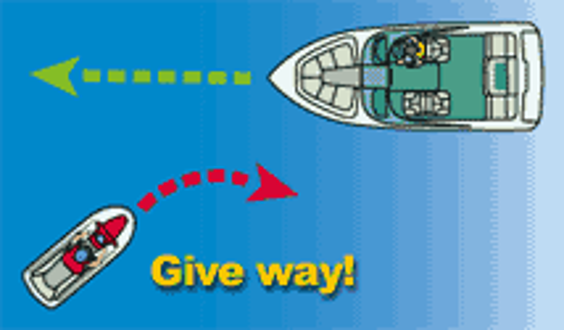
Crossing

A vessel which has another vessel on her starboard side shall keep clear of the other and, if necessary, avoid crossing ahead of the other vessel.

Easy way to remember this is vessel to the right “has rights”!

At night, when a boat to your right shows red, steer right unless you’re 100% sure you can safely cross. If a boat is to your left, you have right-of-way, but be careful!

Rules of the Road

Paddler Safety (Kayak, Canoe, SUP)

  • Considering sail or manually powered vessels having the same light scheme, and if they were considered at the same level in the pecking order:
  • These two basic types of vessels:
  • DO have right of way over power boats, BUT
  • DO NOT have right of way over power vessels restricted in ability to maneuver
  • What does this mean?
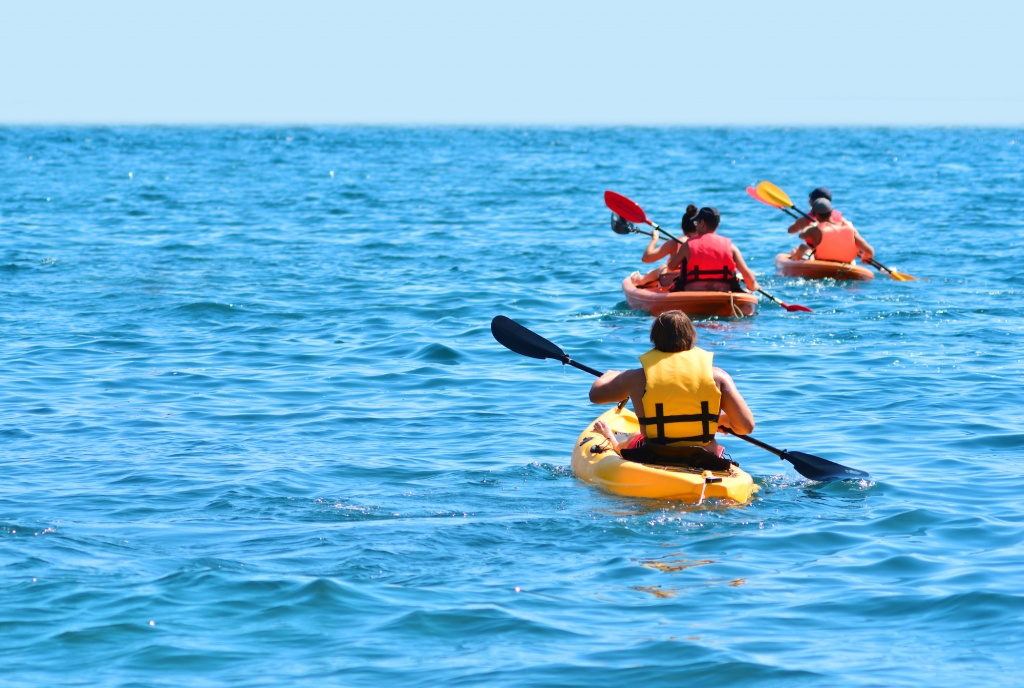
  • When a power boat IS NOT restricted in ability to maneuver, the power boat should give way to a paddle craft
  • When a power boat IS restricted in ability to maneuver, the paddle craft should give way to the power boat
Rules of the Road

What can you do to be safer interacting with paddle craft?

  • Paddle craft should:
    • Use paddles with white or light-colored blades
    • Wear fluorescent life vests or shirts
    • Carry an audible signaling device
    • Avoid paddling in areas with high boat traffic
    • Use flags that can be mounted on the paddle craft
  • Owners or larger boats should:
    • Wear sunglasses
    • Keep a proper lookout
    • Be especially alert in areas where they are likely to encounter smaller craft
Rule 18

Responsibilities Between Vessels (Inland)

Pecking Order

Privileged

  1. Not under command (NUC)
  2. Restricted in ability to maneuver (RAM) (dredging, minesweeping, car carriers)*
  3. Fishing/trawling (not trolling)
  4. Sail or manually powered boat*
  5. Power-driven
  6. Seaplane

Burdened

*important distinctions!

Rules 20-31

Navigation Lights and Shapes

White Light

360 degree light required when anchored

Red and Green Lights

112.5 degree arc = 90+22.5
Required when underway between sunset and sunrise or in restricted visibility
Rules 20-31

Lights and Shapes

Rules of the Road
Rules 34

Maneuvering and Warning

Inland – Signals of intent with appropriate reply required.
Inland Rules require the other vessel to answer with the same signal if in agreement.
One short
I intend to pass you on my port side
x 2
Two short
I intend to pass you on my starboard side
x 3
Three short
I am operating astern (reverse) propulsion
x 5
Five short
Danger, I do not understand, I disagree
WElcome

Sign up for BBA's quarterly newsletter here

Name(Required)
Email(Required)

© 2026. All rights reserved. Better Bay Alliance.

Privacy Policy | ALL INFORMATION ON THIS WEBSITE IS PROVIDED BY THIRD PARTIES. THE BETTER BAY ALLIANCE IS NOT RESPONSIBLE FOR THE CONTENT OR ACCURACY OF ANY CONTENT ON THIS WEBSITE.